0–0.05% BAC
Changes may be subtle
Relaxation and talkativeness may appear, while precision of movement, divided attention and accurate judgement already begin to weaken.
Alcohol and the body
From barely noticeable relaxation to the point where the brain can no longer regulate breathing properly. See what may change as blood alcohol concentration rises — and why the way you feel is not a reliable measure of sobriety.
From the first changes to poisoning
Alcohol is a central nervous system depressant. The initial sense of energy mainly comes from weaker restraint and inhibition. As the concentration rises, alcohol increasingly slows the brain and functions that are not under conscious control.
Relaxation and talkativeness may appear, while precision of movement, divided attention and accurate judgement already begin to weaken.
Reaction time, coordination and judgement deteriorate. A person may feel more at ease even as they objectively make more mistakes.
Unsteady walking, slurred speech, strong mood swings, memory problems and declining awareness of the situation may occur.
Vomiting, hypothermia, confusion, double vision, memory gaps, profound drowsiness or periods of unconsciousness may occur.
Profound drowsiness, stupor, weakened reflexes, falling temperature and blood pressure, and increasingly shallow breathing may occur.
Alcohol can suppress the centres that control breathing, heart rate and temperature. There is no single threshold that is fatal for everyone.
The ranges draw on clinical descriptions from NLM, NIAAA and SAMHSA. They are not intended for self-diagnosis or decisions about driving. Severe symptoms require action regardless of a breathalyzer reading.
The first several dozen minutes
Ethanol is a small molecule that readily crosses cell membranes. Some is absorbed in the stomach, but most is absorbed in the small intestine. Food can therefore delay stomach emptying, flatten the peak concentration and move it later in time — but it does not neutralise alcohol already consumed.
For someone drinking on an empty stomach, the concentration may peak sooner; after a meal, later. This still matters after the last drink: alcohol remaining in the stomach and intestines may continue entering the blood. That is why a person who has stopped drinking or fallen asleep can still get worse.
Drinking quickly can raise the concentration before the body has time to respond.
Food usually slows absorption, but it does not remove alcohol from the body.
The amount of water in the body affects the concentration produced by the same dose.
Opioids, sleeping medicines and sedatives can dangerously intensify suppression.
Cheers · during the evening
Log drinks as you go and follow the estimated blood alcohol trend and the forecast return to zero.
The brain gives away the change first
Alcohol disrupts communication between nerve cells. Among other things, it weakens functions of the prefrontal cortex — the area needed for planning, anticipating consequences and inhibiting impulses. This explains the paradox of the first phase: a person may feel more confident at exactly the point when their judgement is becoming less accurate.
Later, reaction time, visual tracking, precision of movement and balance are increasingly affected. Speech may become slurred and emotions may change abruptly. At high concentrations, alcohol also suppresses the areas responsible for consciousness and automatic functions such as breathing and temperature regulation.
Not only the brain
Blood vessels in the skin widen, so the face may flush and a false sensation of warmth can appear. In reality, the body loses heat faster, increasing the risk of hypothermia at high doses. Alcohol can also increase urination and contribute to dehydration, but thirst the next day is not a simple measure of alcohol concentration.
The stomach and intestines may react with irritation, nausea and vomiting. The heart may beat faster or irregularly. When the gag reflex is impaired, an unconscious person can choke on vomit. Combining alcohol with opioids, benzodiazepines or sleeping medicines further increases the risk of respiratory suppression.
Do not wait for a ‘certain’ reading
Call for help if a person is confused, cannot be woken, loses consciousness, has a seizure, repeatedly vomits, breathes slowly or irregularly, or is very pale, blue, cold or clammy. Do not assume they can simply ‘sleep it off’.
…
Shortcuts that do not work
Caffeine may reduce sleepiness, but it does not remove alcohol from the blood. Feeling more alert does not mean coordination and judgement have returned.
A shower does not speed up the enzymes that break down alcohol, and for a severely intoxicated person it can increase the risk of injury and hypothermia.
Tolerance and adrenaline can mask symptoms. Speaking clearly or ‘feeling fine’ says nothing definite about the result.
Cheers · Android
Cheers lets you log every drink as you go and follow the estimated blood alcohol trend and forecast return to zero. This makes it easier to keep track of amount and pace instead of reconstructing the evening from memory. It supports more informed decisions — it is not a breathalyzer measurement or confirmation of sobriety.
Download for AndroidExplore Cheers →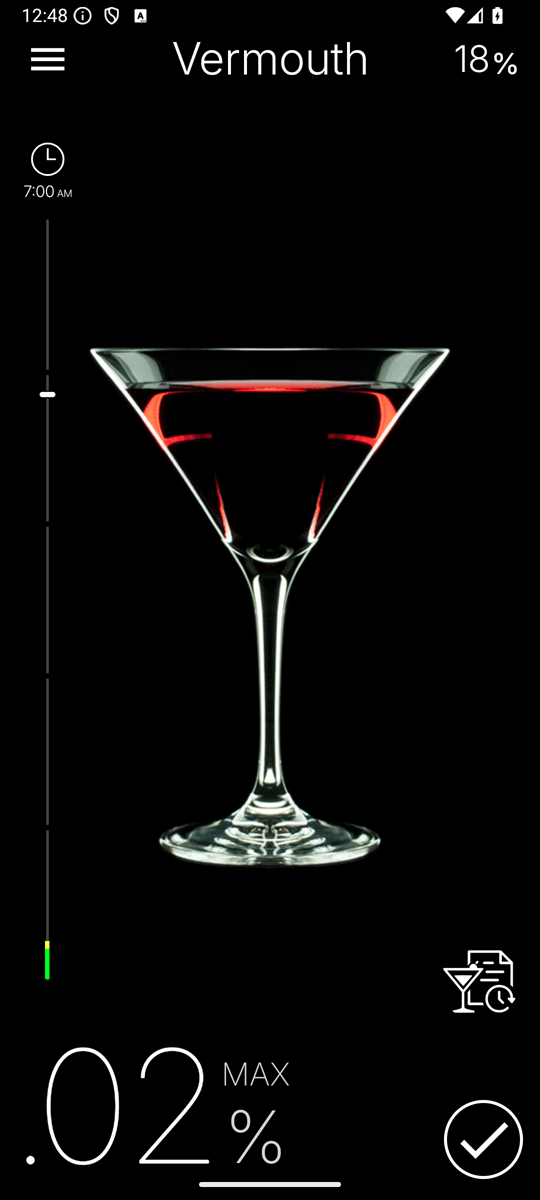

Sources
Warning signs of alcohol overdose, why BAC may continue to rise after drinking stops and what to do in an emergency.
A clinical overview of symptoms commonly observed as blood alcohol concentration rises.
A table linking concentration ranges with clinical presentation, with an important warning about individual tolerance.
A global overview of alcohol's toxic and psychoactive effects and the factors that influence health risk.