What goes into the result
Alcohol provides energy before you add the sugar
One gram of ethanol provides about 7 kcal. That is less than fat but more than protein or carbohydrates, and it applies to every drink containing alcohol.
Calories from ethanol depend on the amount of pure alcohol. If two servings contain the same amount of ethanol, their basic energy from alcohol will be similar even if one is beer and the other wine.
Total energy can still differ greatly. Beer, wine, liqueur and premixed cocktails also contain other ingredients. Sweet syrup, juice, cream or a soft drink can add a substantial share of the result.
Ethanol
About 7 kcal per gram. This is the part that can be estimated from the volume and strength of the drink.
The drink itself
Other ingredients in the product, including sugars, can increase its total energy.
Mixers
Juices, syrups, soft drinks and garnishes can change a cocktail far more than the base alcohol alone suggests.
Two numbers that change everything
“One beer” or “one drink” is not enough information
A small bottle of beer and a large pint are not the same serving. Likewise, a wine glass filled halfway and one filled close to the rim may differ by tens of millilitres. When strength changes too, both the grams of alcohol and the calories from ethanol change.
The most accurate available estimate comes from using the volume and % ABV on the label. The drink name or shape of the glass is only a clue and should not replace those values.
The greatest uncertainty
For a cocktail, the recipe matters more than the name
Ordering the same name in two venues does not guarantee the same serving or calorie content.
Calculate the base
Record each alcoholic ingredient in the drink, its volume and its strength. A double measure should be entered as double.
Add the ingredients
Include juice, syrup, tonic, soft drinks, milk or cream if you know their energy value.
Mark the estimate
When you do not know the recipe, treat the result as a range or cautious estimate, not an exact balance.
Compare like with like
It is most useful to compare the same drinks and similar servings across different occasions.
Do not confuse two questions
Fewer calories does not mean safer alcohol
The calculator answers a question about energy. It does not assess poisoning risk, effects on sleep, medicine interactions, driving or the long-term effects of drinking.
A sugar-free drink may have fewer total calories while containing exactly the same ethanol as its sweeter equivalent. Diluting alcohol with a calorie-free mixer does not remove ethanol from the serving either.
If you are monitoring weight or diet, the result can be one useful part of the picture. It should not encourage switching to stronger drinks simply because they contain less sugar.
A practical record
First record the real serving
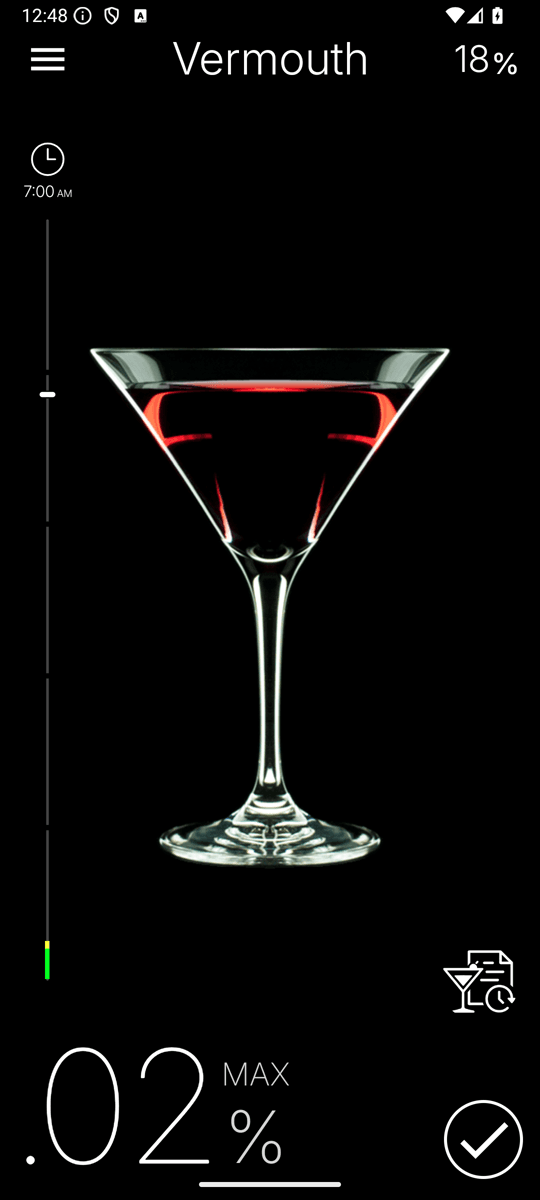
Cheers can help retain information about the type of drink, volume, strength and time. This means a later calorie estimate does not have to rely on “I think there were three drinks”.
The app is not a food diary and does not assess your diet. Its role is to organise the course of a session and alcohol history; the calorie calculator offers another way to read the same data.