
Memory is not a good diary
An evening recorded as it happens looks different from a memory the next morning
After several hours it is easy to confuse the order, serving size, drink strength or the time of a top-up. The more that happens during a gathering, the harder it is to reconstruct later with enough accuracy for a meaningful comparison.
Cheers reduces logging to a few decisions: what you are drinking, how much was poured and its strength. The information is captured while it is fresh, rather than only the next day.
The same drink name does not always mean the same serving. A glass of wine can hold 100 or 200 ml, beer can be 4% or 8%, and a home cocktail may contain a single or double measure. Recording volume and strength reveals differences that counting glasses alone cannot.
The goal is not a diary accurate to the last millilitre. It is data good enough to see the course of one evening and compare it with others.
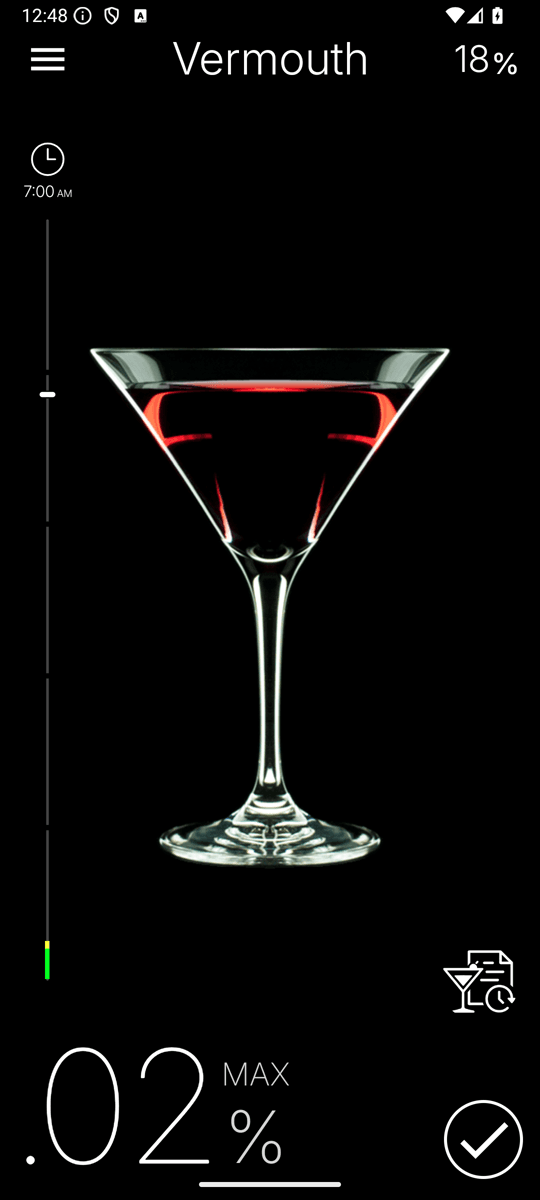
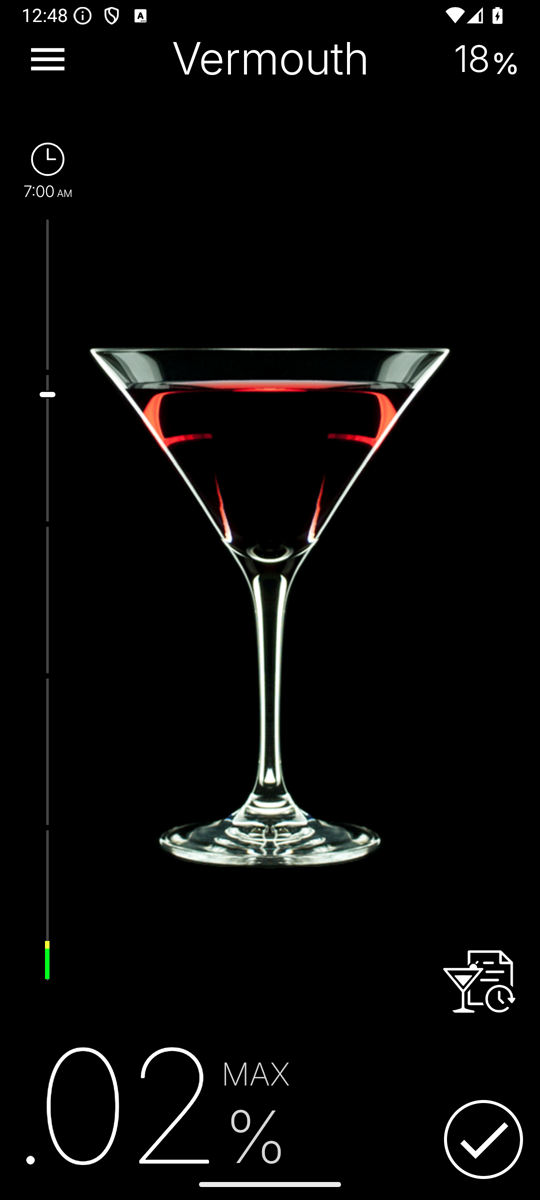
Add a drink
Choose the drink, volume and strength without calculating pure alcohol yourself.
Keep the time
The entry time puts successive servings in order and helps explain the pace of the evening.
Do not reconstruct it from memory
When the session ends, entries remain in history and can be reviewed later.
More than one number
Four elements describe the same session from different angles
A single result says less than the combination of the current estimate, predicted peak, estimated time back to zero and list of logged servings.
Each element answers a different question. The current estimate describes the modelled state at that moment. The peak shows where the recorded course may lead. The estimated time back to zero adds the perspective of the hours ahead, while the drink list shows which data produced the graph.
Read together, they make it easier to see that another serving affects more than the immediate result. It may raise the predicted peak and shift the entire remainder of the session curve.
Current estimate
An approximate value for the present moment helps show direction, but it is not a measurement.
Predicted peak
Shows the highest point produced by the servings logged so far and the model.
Return to zero
The approximate time shows how long the rest of the curve may continue after the last drink.
Drink list
Lets you check whether the correct drinks, amounts, strengths and times are included in the graph.
A curve instead of one number
See how the whole evening may unfold
A current result without a timeline says little about whether the level is still rising, close to its peak or already falling.
Cheers places logged servings on a graph and shows the estimated course of blood alcohol concentration. Successive drinks, the predicted peak and the approximate return to zero are visible in one place.
The timeline helps distinguish three situations that can look very different despite the same single value: the level may still be rising after a recent drink, sit near the predicted peak or gradually fall. Direction and serving context are what give the result meaning.
The estimate uses a model and the data provided. The body is not a clock: absorption and metabolism rates vary between people and situations. The graph therefore helps you observe a trend but does not replace a breathalyser measurement.
Good input data matters
Volume, strength and the correct time make the biggest difference
The model does not know what was really in the glass. It sees only the information entered in the app.
If the serving was larger than selected, the drink stronger than assumed or the entry used the wrong time, the entire predicted curve changes. The product label, actual volume and the most accurate possible start time are the best references.
Cocktails, shared bottles and top-ups require particular attention. In those situations, an honest reasonable estimate is better than choosing an arbitrary undersized serving simply because it looks better on the graph.
Actual volume
Enter the amount poured into the glass, not a default size called “one drink”.
Strength from the label
A difference of a few percentage points can substantially change the pure alcohol in a large serving.
Correct time
Serving time affects where the drink appears on the timeline and the shape of the later estimate.
Correct rather than guess
If you notice an error, edit the entry. History should help reconstruct reality, not an ideal scenario.
A boundary set before the next drink
Two alerts help you keep to your own plan
It is easiest to set a boundary before an evening and hardest to remember it once events are underway. Alerts in Cheers do not decide for you, but they remind you of a goal chosen earlier.
Both alerts use the same predicted curve but answer different needs. One watches a selected level; the other watches a planned time. This lets you fit the goal to the situation instead of relying on one universal warning.
BAC level alert
Set an estimated threshold you do not want to exceed. Cheers warns you when another serving may take the curve higher.
Sobriety-time alert
Choose the time by which the estimate should return to zero. The app can warn that another drink will move that time later.
The data still matters after the evening
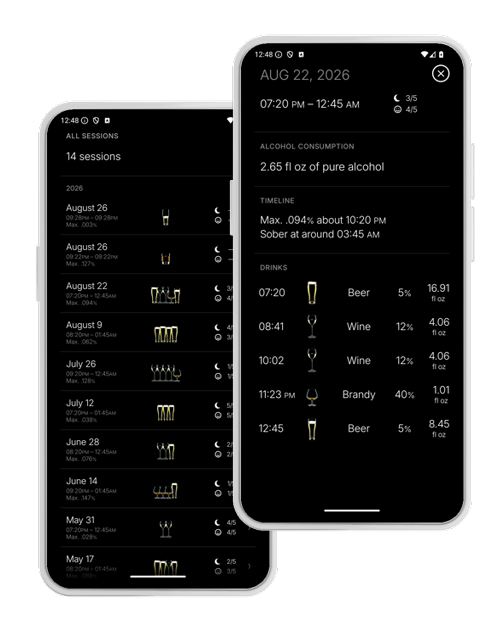
Complete history helps reveal a pattern
One session describes one night. Several weeks of history can show something that is hard to see in the moment.
The greatest value of history is not collecting graphs. It appears when you compare similar situations: spontaneous gatherings and planned nights out, fast drinking and longer breaks, evenings ending at different times, or days followed by different morning wellbeing.
History can be a private reference or supporting material in a conversation with a doctor or therapist. It does not diagnose and cannot decide by itself whether drinking is problematic.
When
Dates and times reveal regularity, breaks and whether alcohol appears in similar situations.
What and how much
A list of drinks, volumes and strengths brings you back to specifics rather than a general impression.
How high
The estimated peak and session curve help compare pace and the size of different evenings.
How you felt
Sleep and wellbeing add context that the number of servings alone does not contain.
Data is a starting point, not the goal
History works best when you ask it one specific question
A general intention to “drink less” is hard to check. It is much easier to observe one element: the number of alcohol-free days, the pace of the first two hours, the frequency of heavier evenings, or how late drinking relates to sleep and wellbeing.
Cheers does not choose the goal or judge the result. It can preserve the material needed to compare the plan honestly with reality. If a pattern causes concern or changing it alone is not working, history can help you describe the situation more precisely to a professional.
Choose one question
For example: do I drink more often than I remember, or are successive servings appearing faster?
Log consistently
For several weeks use the same rules for recording volume, strength, time and wellbeing.
Compare sessions
Look for recurring days, situations and consequences instead of judging yourself from one evening.
Change one element
Set a boundary beforehand, extend the breaks or plan alcohol-free days, then see whether the pattern actually changes.
One tool, three uses
Before, during and after an evening
Cheers does not need to remain open continuously. In practice it has three brief moments of use, each for something different: setting a plan, recording facts or looking back calmly.
Before
Set your own threshold or a time for the estimate to return to zero. Decide what you want to monitor before the next serving appears.
During
Add drinks, watch the trend and respond to reminders. Do not leave the whole reconstruction until morning.
After
Review history and compare the plan with what actually happened. Over time, look for recurring situations rather than one perfect number.
Honest about limitations
Cheers organises information; it does not replace measurement or help
The app estimates the course using a model and user-entered data. It does not measure blood alcohol, confirm sobriety or support a decision to drive.
It does not diagnose dependence, poisoning or mental-health disorders either. If warning symptoms, loss of control or concern about drinking arise, the right step is professional help, regardless of what the graph shows.
In an emergency—breathing problems, loss of consciousness, seizures, severe confusion or suspected poisoning—do not wait for the estimate in the app to change. Call for help and do not leave the person alone.