Calculate your serving
How many grams of pure alcohol are in the drink?
Enter the volume and strength from the label. The result shows grams of ethanol and an approximate number of standard drinks under the definition used by the selected country.
Volume × ABV × 0.8 g/mL. The result is rounded, and the amount poured may differ from the labelled serving.
A common denominator
We do not count glasses. We count pure ethanol
A label reading ‘5% vol’ means that about 5% of the drink's volume is ethanol. A large, lower-strength beer can therefore contain as much or more alcohol than a small measure of spirits. Two figures are needed for the calculation: the drink's volume in millilitres and its alcohol percentage by volume.
Reference point: United States
What does one standard drink look like?
For the selected country (United States), the confirmed standard drink contains 14 g of pure alcohol. At typical strengths, that is roughly equivalent to the amounts below. Actual strength and pour size may vary, so check the label.
Beer 5%
≈ 12 fl oz≈ 14 g
Wine 12%
≈ 5 fl oz≈ 14 g
Spirits 40%
≈ 1.5 fl oz≈ 14 g
Cheers · a more accurate record
Volume and strength say more than the drink's name
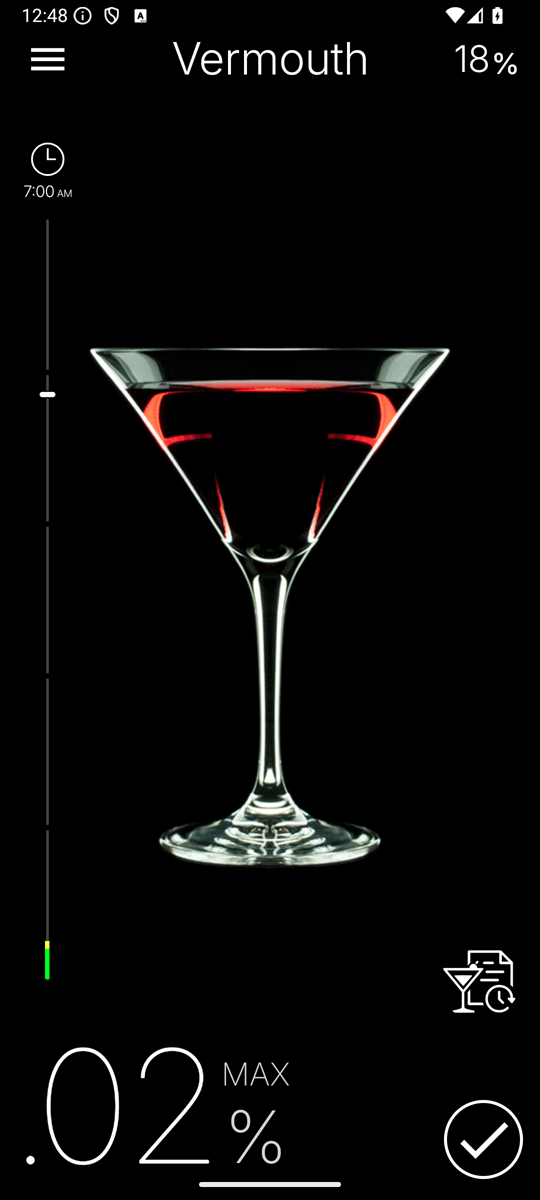
In the app you can adjust the amount and alcohol percentage to what was actually poured — including when the serving is not standard.
Take care when travelling or reading foreign guidance
A ‘standard drink’ is not a universal unit
In the selected country (United States), the confirmed standard drink contains 14 g of pure alcohol. Below, it is compared with the general WHO/AUDIT serving and definitions used in other countries. A drink count should therefore always be read together with its local definition.
The most useful application
A standard drink reveals an amount that a glass can hide
It is especially useful for mixed drinks, larger glasses of wine and higher-strength beers. Instead of assuming that ‘one glass is one drink’, you can compare the amount of ethanol and see how quickly the total grows over an evening.